Platelet function testing plays an important role in understanding haemostasis, monitoring antiplatelet therapy, and supporting clinical decision-making across a wide range of testing environments. As methodologies have evolved, users continue to seek approaches that balance physiological relevance with practical workflow considerations.
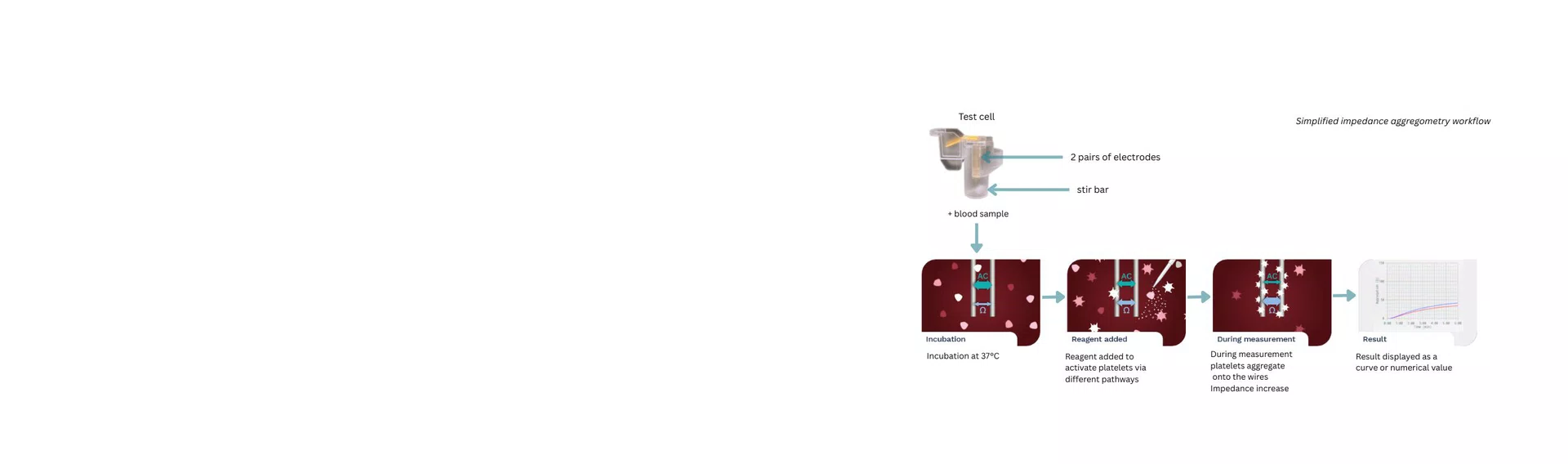
One method that remains widely used is impedance aggregometry, a whole blood platelet function testing approach that allows platelet aggregation to be assessed under conditions that more closely reflect the in vivo environment.
Why platelet function testing methods matter
Platelet testing presents unique challenges. Platelets are highly sensitive cells, and test results can be influenced by factors such as sample handling, preparation steps, and workflow design. For this reason, users must carefully consider both the testing methods they use and how those methods are applied in routine practice.
Impedance aggregometry addresses some of these challenges by enabling platelet aggregation to be measured directly in whole blood, without the need to prepare platelet-rich plasma. By preserving interactions between platelets and other blood cells, the method helps reduce variability introduced during sample processing.
Supporting testing workflows
In impedance aggregometry, platelet activation leads to adhesion and aggregation on metal electrodes, resulting in measurable changes in electrical impedance over time. This principle allows users to assess platelet function while maintaining a relatively straightforward, well-established, and standardised testing workflow.
Because testing is performed in whole blood, workflows may benefit from:
These characteristics make impedance aggregometry a well-established option across clinical and research settings where reliable and reproducible platelet function testing is required.
The role of education in platelet testing
Regardless of the method used, consistent and meaningful platelet testing depends on a clear understanding of testing principles and the factors that can influence results. Pre-analytical variables, such as sample collection, handling, and timing, play a critical role in test reliability and reproducibility.
At Hart Biologicals, we support our customers by providing educational resources that explain established platelet testing methods and promote best practice.
Learn more
For a detailed educational overview of impedance aggregometry, including how platelet aggregation is measured in whole blood and why the method continues to be widely used, we have published a comprehensive guide on our dedicated IMPACT website: www.impactplatelet.com